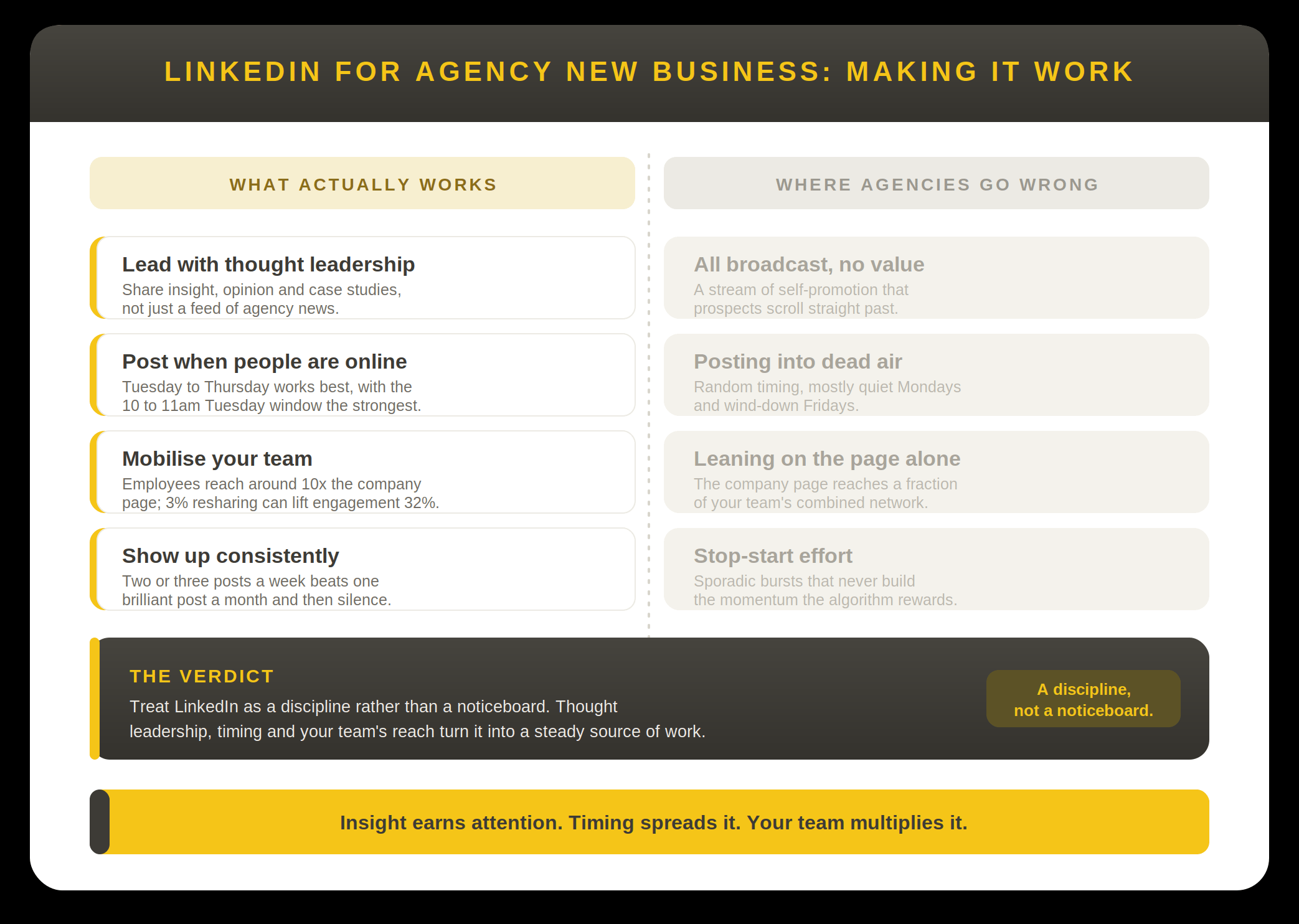
If your agency is not using LinkedIn for new business, you are leaving one of the most effective channels you have on the table. Done properly, it generates leads, builds awareness and positions your agency as a genuine authority in its field. Done lazily, it becomes a feed of self-congratulatory updates that nobody reads. The difference comes down to a handful of principles, and the three that matter most are thought leadership, timing and the reach of your own team.
Establish Real Thought Leadership. Your LinkedIn presence has to earn attention before it can win business, which means it should offer more than a stream of agency news. Promoting your strengths has its place, but the content that actually builds standing is the content that helps your audience: industry news and your read on it, a clear opinion on where the market is heading, practical advice, real case studies, and posts that invite a response rather than just applause. Strike a balance between that genuinely useful material and the occasional agency update, and you become a name people trust and return to, which keeps you front of mind with exactly the prospects you want. The agencies that get this right post as if they were talking to a peer rather than broadcasting to a market, and they are willing to take a position rather than hedge everything into blandness. A point of view people disagree with travels further than a safe observation nobody remembers. If you want to go deeper on this, our piece on thought leadership covers it in more detail.
Post When Your Audience Is Actually There. Timing changes how far a good post travels. Engagement clusters at predictable points in the week, and posting into those windows gets your content in front of more of the right people. The reliable ones are:
- Tuesday to Thursday, in the early morning, around lunchtime, or early evening.
- The 10am to 11am slot on Tuesday, which tends to be the single strongest window.
Mondays and Fridays are usually weaker, since people are clearing the decks at the start of the week and winding down at the end, but both can still earn their place with the right content. A Monday post that helps people plan or solve a problem tends to land, and something lighter and more conversational on a Friday can spark the kind of comments that carry your reach into the following week. The wider point is that consistency beats any single perfect slot. An agency that posts dependably two or three times a week, in roughly the right windows, will out-perform one that publishes a brilliant piece once a month and then goes quiet, because the algorithm and your audience both reward showing up.
Put Your Team’s Reach To Work. The most underused asset on LinkedIn is the one already on your payroll. Your employees collectively reach far more people than your company page ever will. On average they have around ten times the followers of the agency page, and the numbers compound quickly: when as few as 3% of employees reshare a post, engagement can climb by roughly 32%. Picture what happens when a quarter, or even three-quarters, of the team get involved. Getting there is less about mandates than momentum, and three things help:
- Build a culture of sharing by making sure posts genuinely reflect the agency’s mission and values, so reposting feels natural rather than forced.
- Give people light-touch LinkedIn training and a few simple content guidelines, so they know what good looks like.
- Notice and reward the people who consistently share and engage, so the habit spreads through the team.
When your team shares as a matter of habit, your reach multiplies, your new business gets a quiet tailwind, and your agency turns up in front of far more potential clients than your page alone could ever reach. It also reads as more credible, because a recommendation from a person carries weight that a brand post simply does not.
Get those three things right, thought leadership worth reading, posting when people are paying attention, and a team that shares as second nature, and LinkedIn stops being a noticeboard and starts being a dependable source of new business. The agencies that treat it as a discipline rather than an afterthought are the ones it actually works for.