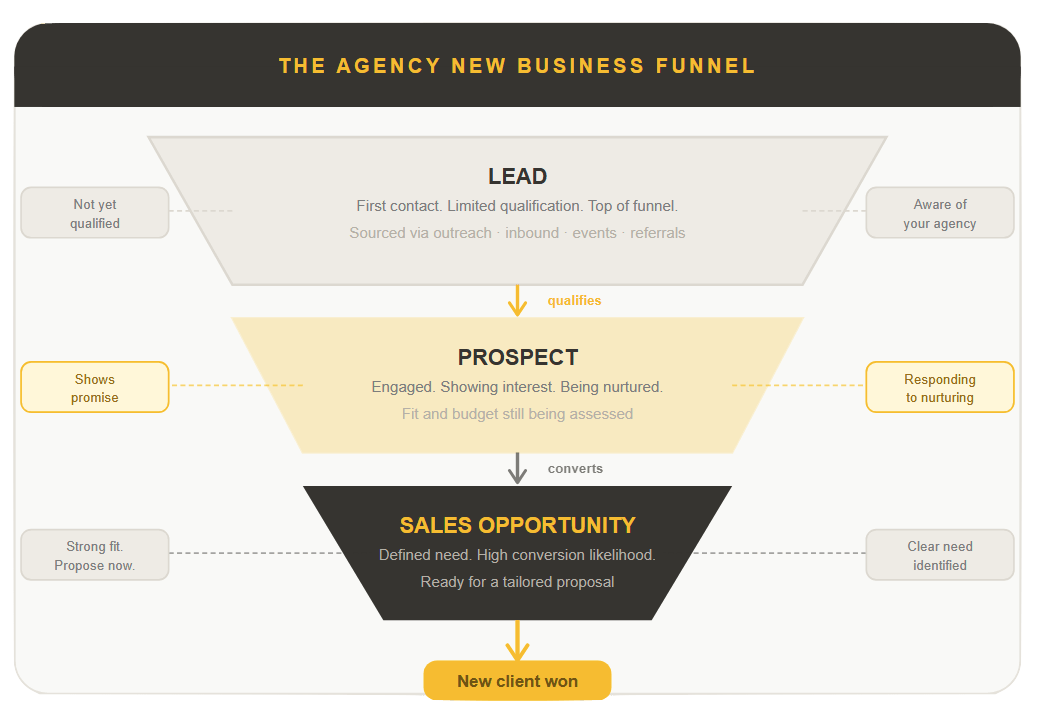
In agency new business, the words lead, prospect and opportunity tend to get used as though they mean the same thing. They do not. Each describes a different stage in the journey from a name on a list to a signed client, and treating them as interchangeable is one of the quieter reasons agency pipelines look healthier than they really are. For creative, PR, digital, experiential and other marketing communications agencies, getting these definitions straight is not pedantry. It is what allows you to forecast honestly, spend your time on the right relationships, and know which conversations are genuinely close to becoming revenue.
What A Lead Actually Is. A lead is the first point of contact at the very top of the funnel. They might have come from outbound outreach, an inbound enquiry, a conversation at an event, or a recommendation from someone in your network. The defining feature of a lead is how little you know about them. You do not yet have a clear read on their level of interest, their budget, or whether they are even the kind of client you want to work with. At this stage the job is straightforward: gather enough information to decide whether they are worth pursuing. Some leads will fall away quickly because the fit is wrong, and that is a useful outcome rather than a failure, since every lead you correctly rule out is time handed back to the ones that matter.
When A Lead Becomes A Prospect. A prospect is a lead who has started to engage. They have responded to your outreach, shown a genuine interest in what you do, whether that is PR, creative campaigns, digital strategy, shopper marketing or anything else you offer, and they are willing to keep the conversation going. What separates a prospect from a lead is movement. There is a two-way exchange rather than a name sitting passively in a spreadsheet. You may still not know whether they fully match your ideal client profile or have the budget to work with you, so the task here is to nurture and qualify in parallel, deepening the relationship while quietly testing whether the fit is real.
When A Prospect Becomes An Opportunity. A sales opportunity is a prospect with a real and present chance of becoming a paying client. The difference is a defined need. They have surfaced a specific business challenge, a gap in capability, an upcoming project or a problem they have decided to solve, and your agency is in a credible position to address it. This is the point where the conversation shifts from building rapport to shaping a response, and where your attention turns to a tailored proposal that speaks directly to what they are trying to achieve. Managing this stage well, particularly through the longer sales cycles common in agency new business, is what turns interest into signed work.
Why The Distinction Matters. Laid side by side, the three stages are easy to tell apart. A lead is aware of your agency but unqualified, an initial contact at the start of the funnel. A prospect is engaged and showing potential, moving towards being a viable client but still being assessed for fit. An opportunity is a qualified prospect with a clear need and a strong chance of converting. The reason this matters in practice is that each stage deserves a different kind of attention. Pouring proposal effort into a lead that has barely engaged wastes time, while giving a live opportunity the same light touch you would give a cold contact loses work you could have won. When an agency knows exactly where each contact sits, it can prioritise sensibly, forecast with some confidence, and stop mistaking a busy top of the funnel for a strong bottom of it.
Putting It To Work. Manifest has spent more than a decade focused on new business for creative, PR, digital, experiential, shopper and the wider marketing communications world, and almost everything we do rests on moving contacts cleanly through these stages rather than blurring them together. Agencies that apply the same discipline find their outreach sharpens, their nurturing lands on the right people, and a larger share of the work they win turns out to be work that genuinely fits.